Wednesday, May 11, 2011
By LYNNE MARIE WANAMAKER
EASTHAMPTON — The other day I read “Lucky,” Alice Sebold’s searing memoir of rape and its aftermath. As a self-defense instructor, three sentences of the explosive first page captured my attention.
Sebold began her memoir at the moment her assailant grabbed her and threatened to kill her. As she fell to the ground and began to struggle, Sebold observed,
“I was wearing soft-soled moccasins with which I tried to land wild kicks. Everything missed or merely grazed him. I had never fought before, was chosen last in gym.”
When I showed up in self-defense class in 1986, I had never fought before. I was chosen last in gym. At some point during my first few weeks of learning and practicing the skills of mind, voice and body I had an epiphany that sings to me 22 years later.
It is one of those phrases that came into my mind fully formed, like a skywriter’s banner.
We were talking about the possibility of an attacker having a weapon and I understood with a start, “If I have a body and he has a body, we are even. I could fight back.”

Physical capacity, strength and training do not exempt women from risk of rape; far too many women who were not picked last for gym are assaulted and victimized.
As Sebold’s agonizingly detailed account demonstrates, rapists bring an arsenal of weapons: fists and feet and threats and shame and sometimes knives and guns. The responsibility for ending physical and sexual assault lies with the rapist; our preparation or lack-thereof does not have any bearing on it.
Sebold, like far too many others, was not raped because she didn’t know how to fight back. She was raped because her attacker overpowered her.
When I think back to the moment of my own insight, I remember carrying it with me out of the dojo like a precious treasure. At the age of 18 I had finally discovered that I had a body, that my body was mine, and that it might be possible for me to be strong and powerful. It might be possible not just for an attacker to use his body as a weapon, but for me to use my body as a weapon.
My body might be a weapon.
How is it possible that I lived until I was 18 years old without recognizing the fact that my body is my own?
How is it possible that I — like Sebold, like countless young women — stood on the precipice of adulthood without knowing that my body could be a weapon? That I could use it to defend myself? Why had I never practiced the fighting skills I might someday need?
The Justice Department estimates that one in four college women will experience sexual violence during her time in school. Safety experts Gavin de Becker and Ellen Snortland consider self-defense a basic “physical literacy” all kids should have.
In a 2009 Huffington Post essay, Snortland and de Becker wrote, “Parents inadvertently ignore a vital safety consideration if they focus on campus security without taking into account their child’s personal physical literacy. If Jane doesn’t know how to physically defend herself, she’s illiterate.”
Sebold and I headed off to college in the 1980s. In the intervening 30-plus years women have enjoyed expanded opportunities in business and sports. Our society has accepted greater roles for women in the military — even in combat — and we’ve engaged in a conversation about “mean girls” and girl-initiated violence (which may or may not be on the rise, depending upon which researchers you believe).
But we have not accepted a basic fact: In a society where one out of six women will experience an attempted or completed sexual assault in her lifetime, self-defense is a basic life skill. It should be considered as fundamental as balancing a checkbook, using a washing machine, or reading a map.
In a world where one out of four college women will experience sexual violence, parents must begin to find it inconceivable to send our daughters to campus having “never fought before.”
Lynne Marie Wanamaker, is a National Women’s Martial Arts certified self-defense instructor. Her next class for teen women begins May 15; for information visit www.compassionateconditioning.com. She blogs at www.mindbodymama.com.
Wednesday, April 27, 2011
EDITOR’S NOTE: In connection with its 25th anniversary celebration this spring, the Cutchins Children’s Clinic in Northampton held a writing contest for children. Participants in grades 3, 4 and 5 were able to choose topics. Most elected to “write about a person, place or thing that makes you feel safe” or “something you do that helps you calm down when you are really mad or upset.”
Today, the Aspire Project publishes the entries that contest judges recognized as the top two in each grade category. They address the idea of safety and personal security in a sometimes difficult world.
FOR PHOTOS from the program's celebration, click here.
---
CONTEST WINNERS
Grade 3
‘Things That Make Me Feel Safe’
By ALEXIE J. ROBLES
Ben was calling me names at indoor recess and I was going to get blamed on. I felt mad. I started walking around and then I took a walk with Ms. B-G. Ms. B-G is half funny and half cool because she had a motorcycle before, and that is true too.
Sometimes I need space. I walk out of the room to the hallway at my favorite window. Ms. B-G and I sit at the window, I open it a little bit and I reach to grab the snow. I’m much better now. We talk about anything else besides what happened. We talk about what happened later when I’m not upset.
Some of the things that get me upset are when my work is really hard, or if someone fake punches me. Then I do my karate moves and Ms. B-G says “Whoa ... come for a walk.” Sometimes we go outside for a walk. Today at recess my teacher said everyone has to play together. No games until you learn how to share. The others got angry, but I got really angry. I went under her desk but she said I had to come out. I was mad and Ms. B-G said, “Let’s go for a walk, I need some water” and we took a walk.
I earn choice time when I get my checks on my chart — the chart helps me stay focused throughout the day on my school work and my behavior. I get 12 checks in the morning and 9 in the afternoon. Without Ms. B-G’s help I’d never have choice time, and then I would feel really sad.
Alexie J. Robles is a student at the Jackson Street School in Northampton.
---
Grade 4
‘How Mr. Smith Makes Me Feel Safe’
By DAVID WEISMAN
Mr. Smith is the new principal of my school in Leeds. When I first saw him I knew that he would be a good principal because I saw something in his eyes that was telling me he’s a great man. What makes me feel safe around him is that whenever you need to see him he always listens very carefully and he knows what to do about the problem. When I had a problem with my friends I went to talk to him. He listened to all the words I said and told me to take a break from playing with my friends and to play with some other kids.
So that is what I did. After a couple of days I went to ask my friends if I could play football and they said yes so we played. After that was over I had another problem. I went to ask my teacher but since he was there I asked another teacher around if I could see Mr. Smith. Sometimes they would say no and sometimes they would say yes. When Mr. Smith had figured the problem and told me what to do I did what he said. And sometimes a teacher can help you.
Since I have a very special relationship with Mr. Smith I talk to him. We have a relationship because he and I play chess. Mr. Smith said that there would be a chess club. Sometimes I just go play chess with him so I can cool off. But sometimes I go to his office and play chess so I can become the new chess teacher. And I must say his office is very, very organized. And also since he is a person and not just a principal he also will laugh and have fun even if he has a very important job. He will also laugh at his own comments or at someone’s joke.
And if I have a problem I know where to go. I have to go to super Mr. Smith, the person who can solve any problem. And so I thank my good pal.
David Weisman attends Leeds Elementary School and lives in Florence.
---
Grade 5
‘Bullying’
By JULIA LAFOUNTAIN
Bullying usually starts
Right in your heart
Because a guardian or parent
Is not doing their part.
Even a push or a shove
Might make you want to cry
Most kids say it makes them
Really want to die.
Some people can be mean
But why don’t you forgive
Because your heart’s been crushed
And you have nowhere to live?
In school, you start to feel
Like you’re in a black hole
That makes the bully know
They’ve achieved their evil goal.
But if the bully knows that,
Then they’ll come back again.
So try to keep it quiet
And do not tell a friend
So go straight to a teacher
Or someone you can trust
And tell them your problem
And hope you said enough.
The teacher will investigate
And find out the truth
The bully will be punished
Their mean flies out the roof.
And every time you meet
That bully in the hall,
Just turn around and say ...
“I WON’T BE BULLIED AT ALL.”
Julie LaFountain attends Leeds Elementary School and lives in Easthampton.
---
HONORABLE MENTIONS
Grade 3
‘The Hugging Chair’
By ARIANA PLANTE
One day, on July 24, 2009, my daddy passed away. It was so unexpected. He was only 52 when he died. My daddy loved hugs so he invented something called the hugging chair!
So it was a place where we could always get hugs. It was always safe so even if you did something really, really bad, you would still get a hug. No one could be angry or negative in the lovable hugging chair. It is a lovable and peaceful place to be. Any time you are sad you can go to the hugging chair and yell “I need a hug” and mom would rush to the hugging chair and give us a hug.
When mom told us that daddy passed away she sat us down in the hugging chair and surrounded us with all our favorite things like all of our stuffed animals, best friends and especially family. Mommy knew we would need a hug.
Now when I miss daddy I go to the hugging chair and get a hug from mom and Ray and Toby.
Now when I miss daddy for a hug mom is always there first, then Ray and Toby (our dog). We miss and love him very, very, very much. I am oh so grateful for the hugging chair.
When I’m just having a bad day I go to the hugging chair. When I am not behaving and I do not understand why, I go to the hugging chair to start my day over. We always get to start our day over no matter what we do and we don’t get in trouble. Nobody’s perfect and the hugging chair is the perfect place to go when you are not feeling perfect.
Everybody should have a hugging chair.
Ariana Plante is a student at the Finn Ryan Road School and lives in Florence.
---
Grade 4
‘Feeling Safe’
By DANIELLE ROSSI JORDAN
• I feel safe when I am with my family because I know I can count on them. They are there whenever I need them. I do not like being alone or being in the dark because I can not see and I might not know where I am.
• I feel secure when I am at a place that I know well because I know were I am.
• I feel protected in my bedroom because I am surrounded by all of the things I own.
• When I play soccer, I wear shin guards and a mouth guard to protect my legs and teeth from being kicked and from being hit with the ball.
• The crossing guard helps me cross the street safely by holding up a stop sign. All the cars stop and I can cross the street.
• When I learn a new gymnastics move, my coach spots me so I do not get hurt.
• When I go swimming, I feel safe when there is a lifeguard. I also feel safe when I am wearing a life vest.
• I feel better when I am wearing a seat belt in the car.
Danielle Rossi Jordan attends the Jackson Street School and lives in Northampton.
---
Grade 5
‘Sitting on the Couch’
By NATALIE KAYE
Sitting on the couch, Pekoe, my dog, in my lap, looking out the window to see that snow has fallen and is still falling.
To see that the trees are painted with white from the snowflakes. To see all the people bundled up making snow angels, snowmen and going sledding.
To feel the warmth of my dog and his white and light brown fur running through my hands.
To hear my mom read to me as we are bundled up on the couch, sipping hot chocolate.
To watch a movie with my dad covered with blankets on the couch.
To laugh with my sister until I beg her to stop. All of these things make me feel good, warm, and safe. I hope you felt it too!
Natalie Kaye attends Leeds Elementary School and lives in Florence.
Tuesday, April 12, 2011
By JULIE WAGGONER
WHATELY — “Jack Reed wants to be friends!” declared Facebook. Jack’s microscopic photo grinned at me, and I felt an anxious sweat on the back of my neck. Jack Reed: high school torturer and bully, imprinted in my memory as one of the gang of boys who threw spitballs at me, called me “dog,” “skag,” “flat-chested” and generally made my life miserable.
I’ve found Facebook a wonderful way to regain touch with people I’d lost track of, but still care about: the witty, engaging, high school teachers we’d dubbed “Aunt Pat” and “Uncle Bob.” The college friend and breast cancer survivor, for whom I couldn’t find a forwarding address – we now email weekly I am richer for these cyber-space connections.
But an ex-torturer? Why would he want to be my “friend” – and why would he imagine I’d respond? Was he clueless about his impact on me? Is he even sorry?
“I wasn’t an under-the-radar nerd,” I explained to an Aspire Project coordinator. “I was a target nerd.”
(Julie Waggoner, left.)
Singled out for daily, malicious reminders of my unattractiveness, uncoolness, and unworthiness – it’s a scar I carried into my life. As a friend said about emotional injury, “It’s a scar, but in certain lights it looks exotic.”
I didn’t respond to Jack — that’s not his real name — immediately. Instead, I posted a Facebook wall query: “What do you do when a kid (now adult) who threw spitballs at you in high school, mercilessly harassed you, and made your life miserable, wants to be ‘friends’?”
Friends advise me
The response was instantaneous, passionate and varied. “Ignore! No reason to re-live history,” said one friend. “Great opportunity for forgiveness?” counseled another. “You cannot cure a bully!” warned a man.
Another revealed that his high school football buddies had been “Neanderthals” who’d picked on another student. On Facebook he’d recently apologized to that student, and received forgiveness. Some said former torturers had contacted them via Facebook specifically to apologize; they’d appreciated the gesture.
The comment chain grew, as participants philosophized. “Are we talking forgiveness based on the perpetrator’s awareness that forgiveness is in order, or on the larger, ‘Christian’ scale?” mused one.
Curious, I viewed the public elements of Jack’s Facebook page: Unitarian. Democrat. Self-described as “open-minded.” Married to the female mayor of a struggling urban community. Strange — we should have been friendly in high school.
Why, then, did I have such an immediate negative response to him?
A thought occurred: Was he was one of the nice kids and — in my middle-aged memory muddle — I’d mistaken him for a tormenter?
No. I was fairly certain that my instinctive response was accurate, and I shouldn’t ignore it.
Yearbook’s take
I hauled out my senior yearbook: There was Jack’s grinning face, bigger this time, chortling with another boy whom my imprinted memory also labeled bad news.
Under Jack’s class photo, no affectionate “I’ll remember you always” scrawl. No indication that we were pals.
Yet as I thought further, another classmate rose to mind as the prime offender in the bully gang. I couldn’t recall more than one specific instance of cruelty by someone who, now that I mulled it over, was probably Jack Reed – but maybe not.
I couldn’t anticipate Jack’s regret over — or even recollection — something I kind of remembered that he might have done.
I contemplated the impact people have on each other: That I, more than 30 years later, could feel that stifling cloud of fear and humiliation. That as recently as 15 years ago I was apprehensive around teenagers — joking to a friend that I worried I had “Nerd pheromones – they’ll smell them on me, and pick on me even if I’m an adult.”
But what about growing up, taking power, moving on?
Was I going to let any portion of my life be governed by the thoughtless, cruel remarks or actions of people who were essentially children at the time? I’d built a beautiful life for myself, with loving friends and family, a wonderful spouse, and satisfying work. I was even – surprise! – told I was attractive.
Bullies and fear be damned!
I emailed a high school friend, Facebook friends with Jack. “Jack Reed: nice kid? Or as I recall, a jock and bully?” She identified him as the “Local stoner … skipped classes. Swim team. Spitballing? Probably.” But she remembered him affectionately, and as having “a wicked sense of humor.”
Ding-ding-ding! A wicked sense of humor can mean someone is mocked – and the mocker isn’t concerned about the target.
“Debby-poo, debby-poo!” my fourth-grade friends and I sang, while Debby Smith smiled, and smiled … and burst into tears. The teacher rushed over. Debby identified our table of girls as her tormentors, and sobbed “My mom told me to smile if people tease me.” I was horrified that she’d cried, that she actually had feelings.
Wasn’t she just there for me to make fun of?
Testing waters
I sent Jack a Facebook message, to determine who he might have been.
“Forgive me if memory serves poorly,” I wrote, “but I recall you as a fellow who spat things at me and called me nasty names. If I’m correct, I’m curious about the ‘friend’ request. And if my memory is wrong, enlighten me!”
“Not I, said the cat,.” he replied. “I never called anyone names, to my recollection. And I do not remember expectoration.”
A humorous and literate response.
I asked if he was up for further exchange, to figure out our past connection. He agreed.
He remembered my “Janis Joplin style” and our shared English classes.
Not I, said the nerd! He’d confused me with one of my best friends, also named Julie, a girl whose frizzy blond hair and studiously grungy clothing made her a cooler chick than I’d been. And Jack claimed he didn’t indulge in harassment and found what his fellow swim team jocks did to be “cruel, not funny.”
There was no apology forthcoming, but I didn’t need one. If he’d bullied, he didn’t remember. He’d been willing to have an exchange and it had been respectful. I figured he’d be privy, once friended, to the lengthy and informative wall discussion about high school and bullying.
I’ve made thoughtless jokes at others’ expense, myself. And I’ve changed, and become both more resilient and more considerate over the years. I imagine that most of us have.
This isn’t the halls of high school, where I had no choice over who spoke to me (or spat at me).
As an adult, I choose my connections. I also admit that I am curious as all heck about who people are now. And if necessary, there is always Facebook’s “unfriend” and “block.”
Reader, I friended him.
Julie Waggoner is a freelance writer, graphic designer, comedienne, and actress.
Friday, April 8, 2011
By STUART SINGER
SOUTH HADLEY — As a former special education director and director of guidance services, I always felt a bit uncomfortable when our school district sent home letters to student’s families with “optimal performance” strategies during MCAS testing weeks.
Not because I didn’t want our students to perform well on MCAS, but because it always felt a bit self-serving.
You see, these tests are, in part, a way of grading us, the educators. Many of the suggestions revolved around how the students can be as mentally and physically prepared as possible during these specific test weeks. Suggestions included plenty of rest, eating a healthy and appropriate breakfast, proper hydration and not overdoing it with extra activities.
(Stuart Singer, left.)
Additionally, the teachers were asked to be judicious with homework that week. These are all examples of how to de-stress and provide the students’ bodies and minds with the appropriate rest and fuel so that they could be at their very best.
The question that I could never stop asking was, “If we know that these practices optimize the student’s ability, why were we not promoting them all year long? And why weren’t we, the professionals, modeling these behaviors more often for our students?”
I am a father of three in a dual-working parent home, so I am well aware of the pressures to run like crazy to get everything completed, and make sure that the kids do all of their school work and attend every activity. However, a very real and serious issue that is facing kids and families today is the level of stress that they are experiencing.
Teachers are not immune to this stress and, in fact, may be in the epicenter. The pressure in the classrooms to meet high standards while dealing with larger class sizes, dwindling resources and a greater spectrum of educational needs within the classroom is higher than ever.
Now, with the issue of bullying being at the forefront of every discussion regarding the social-emotional development of our children, the issue of stress and the role it plays in all of our lives needs to be discussed.
Emotional health
For a number of years now, I have been providing stress-management seminars to school staff and school administrators. These trainings focus on time management skills, exercise, appropriate rest, healthy eating and mindfulness.
When adults are chronically stressed, we are more irritable, are increasingly tired, express less patience, gain weight, lack energy, have a reduced ability to problem solve, and can become actively disengaged along with a host of other issues.
As you can see, this list of behavioral characteristics does not paint a picture of someone at his or her optimal best. The tragic, unintended consequence of this is that we teach our children that this is exactly how they should take care of their own mental and physical health.
It can be reasonably assumed that children that are feeling high levels of stress are more likely to have a shorter temper, potentially act out in emotional and aggressive ways, or become disengaged and withdrawn.
We, the educators and parents, should be modeling positive stress-management skills for our students and children.
Getting at least a half-hour of exercise, say, from walking, a minimum of three times a week, getting appropriate rest, eating three meals per day, getting organized and taking time to just re-engage with our lives are skills that will improve our overall health and, in fact, our overall performance.
Just as importantly, this sends the message to our children and students — by following these behaviors they can improve their own energy, mood, patience, and ability to stay focused.
Further, when students experience these improvements they are more likely to join productive school activities, have increased positive interactions with peers and teachers, and are less likely to turn to negative behaviors such as self-medicating with drugs and alcohol, or being emotional over-reactive which can lead to negative social interactions or even outward aggression towards peers.
While I can not say that the promotion of overall stress-management to school staff is a magic bullet for all of the difficulties faced, I can say teaching and modeling these essential life-skills can only have a positive affect on the overall school climate and serve to promote physical and mental wellness.
By caring for themselves, parents and teachers increase their mental and physical capacities to take on the incredible challenges and work that they do in guiding and leading their children and students. In turn, children can learn to take better care of themselves and others.
I believe that Benjamin Franklin said it best, “Tell me and I forget. Teach me and I remember. Involve me and I learn.”
Stuart Singer is the assistant director of James Levine and Associates P.C., a psychotherapy and consulting practice located in South Hadley and Westfield.
Friday, March 25, 2011
By LYNNE MARIE WANAMAKER
EASTHAMPTON — The other day, I asked a room full of teen self-defense students, “If someone chooses to assault you, whose fault is that?”
It was the giggliest of the bunch who answered solemnly, “His fault.”
I concurred. “And if you were somewhere you shouldn’t be, hanging out with a bad crowd, wearing the wrong shoes, and someone chose to assault you? Then whose fault is it?”
Her face clouded. “His fault?” she said with less certainty.
In her opinion piece published Feb. 28, Massachusetts Daily Collegian columnist Yevgeniya Lomakina stumbled on the same question — and, unlike my young student, did not come up with the right answer.
Lomakina wrote, “If a young woman wears a promiscuous outfit to a party, then proceeds to drink and flirt excessively, she should not blame men for her downfall. She made a decision to dress a certain way, to consume alcohol and should be prepared to deal with the consequences. Far from being a victim of rape, she is a victim of her own choices.”
It’s tempting to see Lomakina’s stunning misogyny — like her factual inaccuracies — as a reflection of her own (and her editor’s) journalistic inexperience. The newspaper later apologized for running the essay.
But then on March 8, New York Times reporter James C. McKinley Jr. found it relevant when reporting on the sexual assault of an 11-year-old girl by 18 men and boys to include these observations: “Residents in the neighborhood where (the assault occurred) said the victim had been visiting various friends there for months.
They said she dressed older than her age, wearing makeup and fashions more appropriate to a woman in her 20s. She would hang out with teenage boys at a playground, some said.
“‘Where was her mother? What was her mother thinking?’ said Ms. Harrison, one of a handful of neighbors who would speak on the record.”
These reporters give voice to the persistent belief that someone other than the attackers — the victims or, should they be minor children, their mothers — are to blame for sexual assault.
It can be difficult to hold onto two apparently paradoxical truths.
First, that women and parents can increase their own and their children’s safety by employing self-protection skills. Second, that the ultimate responsibility for sexual assault always falls unambiguously on the assailant.
Among the teens in my program, it was the oldest, boldest girl who called me out on this apparent contradiction.
“Why isn’t it your fault?” she challenged. “If you make bad choices, if you take risks you shouldn’t take, why isn’t it your fault if you get hurt?”
I offered a metaphor.
“What is the difference between leaving your car unlocked and not having it stolen, and leaving your car unlocked and having it stolen?”
“The difference is a thief. The difference is some person — not you — who chose to steal your car.”
I teach self-defense because I want girls and women to have every tool imaginable to keep themselves safe. Many of these tools are skills of judgment, intuition and decision making. Often, we keep ourselves safe by assessing the risk of a situation and taking action to reduce our exposure to that risk.
But we should be able to be at our most vulnerable and not be subject to someone else’s choice to take advantage of that vulnerability.
We should be able to underdress and overdrink without risking anything worse than a cold and a hangover. We should be able to be 11 years old. Whether or not we are hanging out with older boys, whether or not our mother is watching us.
There is a reason we persist in blaming the victims of sexual assault, even when the victims are ourselves. If we can assign a reason for why the attack occurred — she was in the wrong place, her mother wasn’t supervising her, she flirted too much — we can promise ourselves that, because we’ll never engage in that behavior, we’ll always be safe.
One in six American women will experience a rape or attempted rape in her lifetime. That’s not because one sixth of American women go to the wrong neighborhood or dress provocatively. It’s not because they drink too much or flirt too much or because their self-defense failed them.
One in six American women experience sexual assault because there are a lot of rapists out there. It is up to all of us to stop giving them quarter.
The first step is to stop justifying their crime by blaming their victims.
Lynne Marie Wanamaker is a National Women’s Martial Arts Certified Self Defense Instructor. She blogs about the intersection of self defense and parenting.
Friday, March 11, 2011
By ARTHUR FRIEDMAN
SOUTH HADLEY -- During a recent visit to a high school in Massachusetts, where I was invited to train students and parents on anti-bullying, something unexpected happened.
As a child welfare and behavioral health provider for over 30 years I have seen and treated a range of "harassing" behaviors.
When the fervor of bullying erupted in South Hadley, the town in which I practice, it was a timely transition to get in to the anti-bullying business.
I have developed an anti-bullying curriculum for K-12 and have been fortunate to have the opportunity to work with school systems, administrators, teachers and special education staff, as well as students, parents and caregivers.
On the first day I made presentations to grades 9 to 12 and then held a parent meeting at night. On the second day the principal and assistant principal arranged for me to meet with the different student clubs, teams and associations.
(Arthur Friedman, left.)
From the honor society to the football team, these focus groups of 40 to 50 students filed in and out of the school's library. Each meeting started with getting feedback on the training from the day before, and to talk about starting a Student Anti-bullying Task Force.
One senior from the football team stood up and said, "We don't have a bullying problem or bullies at our school." Next, an attractive young girl chimed in and said the same. A well-dressed seemingly popular girl said, "I don't know why you people are looking for problems we don't have at our school."
I glanced over to the school principal, who was shaking his head.
As I looked around the room I could see the targets, kids who live with daily teasing and tormenting, restless in their seats and looking discouraged.
For the next hour the principal, teachers, coach and I faced a new challenge -- how to address bullying "denial" from the bullies, aggressors and even bystanders. Denial that is mainly linked to the bully's fear of becoming a target his or herself.
The principal let the group know that bullying was a serious issue and he had five complaints on his desk as we spoke.
The coach told students that he knew about bullying from his own experience.
I turned the focus to being a target, and asked the entire group to imagine the fear and rejection these students experience every day. I went on to remind the students that although they did not have a death related to bullying yet, unless the social climate at the school changed, it was just a matter of time. As the group became restless we addressed the importance of “kindness” and how creating a “culture of kindness” was up to all of us.
As this group filed out of the room, the principal asked four of the most vocal students to stay after. Together we talked about how bullying denial can lead to dangerous outcomes. As the targets left the meeting they could see that these students were staying behind.
Perhaps that gave the targets hope. Perhaps it helped them to feel more safe. Perhaps they will see that “bullying denial” will be confronted at their school.
I hope our efforts that day helped to start changing the social climate in the school, but when it comes to bullying denial, we all must stay vigilant and focused on the truth. Addressing bullying denial needs to be a priority for parents, schools and communities.
As we encourage targets to come forward to report bullying, we need to be sure they are safe from retaliation, future harassment and the damaging effects of bullying denial.
Arthur Friedman, Ph.D., is a psychotherapist, trainer and consultant at James Levine & Associates in South Hadley. He provides anti-bullying training to schools and communities around Massachusetts, and has served as a resource to schools in the planning and implementation of the anti-bullying plans, policies and programs. For more information, call 534-7400.
Monday, February 14, 2011
EDITOR'S NOTE: In an Aspire Project post last week, Chris Overtree, a psychologist with the University of Massachusetts, described why improving a school’s social climate is key to reducing instances of bullying. Today, he suggests specific steps to take.
By CHRIS OVERTREE
AMHERST — Reforming a school’s climate must be both top-down and bottom-up.
Reducing bullying and promoting a more positive social climate means seeking consensus amongst leaders at the top and the bottom of the system, the superintendents and kindergarten students, the teachers and the bus drivers and the parents.
We are all leaders in this process. School boards dismiss student and teacher opinions at their peril, as changing school climate is not something that can be decreed or legislated.
A process can be put into place, funding can be secured, but change happens on the ground.
With the support and encouragement of high-level administrators, teachers, students and parents quickly become the most important pieces of the puzzle.
A broad consensus about even something as simple as “it is a good idea to try to improve our school” can be the first essential step. (Chris Overtree photo by Gordon Daniels.)
In the same way that becoming motivated to change unhealthy eating habits can be the beginning of a successful diet, developing community consensus about the value of striving for school improvement can be the beginning of change.
Nurture student leaders
Too often, systems try to change students without involving them, and without recognizing the value of placing them into leadership roles.
Rather than trying to change students, we need to use students to promote change.
Several years ago, I worked with a high school that had seen the improvements accelerate after their third year focusing on climate.
We realized to our great pleasure that the student leadership programs implemented in the middle schools were starting to impact the high schools as students moved up the grades.
When I asked one high school student why he decided to join the Respect and Leadership Team, he said simply, “I have always been part of that team.”
In our climate reform work, we actively seek a diverse student leadership team, broadly representative in all possible ways, something we often refer to as “drawing leaders from every table in the lunchroom.”
Well-meaning people often forget to include others who, because of their status or standing, are more forgettable. Student leaders, with the help from and permission of their teachers and principals, can do much of the legwork themselves.
And just the very act of being given a voice can begin to effect real change.
But it is not enough to highlight student leaders; they need jobs.
Using transparency
Understanding the problem is the next step, and this is where data becomes invaluable.
Good school climate reform relies on standardized but anonymous student, teacher and parent data, with the results compiled and shared broadly and transparently. By looking at data first, we generate consensus around the issues that are the most prominent in a school.
We can garner our resources to tackle the biggest problems, and figure out which ones students and teachers have the most energy to try and solve. Student leadership teams can lead the charge, by administering the survey to their classmates.
In doing so, they impress upon their fellows the importance of improving the school and the unique opportunity that every student has to really tell what they know about their school.
Student leaders are more effective at emphasizing this point, and also give credibility to the protection of anonymity needed to convince students to be truly honest.
But this transparency has a price, and members of the media and community must share in the burden.
For schools to be more transparent about areas of concern and difficulty, we need to be more understanding that school climate is not a goal, but a process.
Schools don’t finish teaching math, nor should they ever finish working on school climate.
And when schools are courageous enough to identify problems and strive for solutions, we need to be as supportive and understanding that sustainable change is a gradual process.
Setting plans
Using data to drive the process, actions can be planned. In the example in last week’s article, changing the staffing procedures for recess and literally asking the snowplow to move piles of snow to the other side of the parking lot did the trick.
You may be surprised to learn that some solutions to big problems are actually quite small. This is why data is so important. It keeps us from wasting effort and allows us to put our resources where they are needed most.
A middle school in Tennessee I worked with a few years ago realized that one of the central themes emerging from their student data was an underdeveloped or undervalued sense of empathy for others. While there are formal curricula that can be used to promote empathy, they chose another route.
An enterprising teacher wrote a small grant to purchase about 50 handlooms, which kids could use to learn to knit.
Then she created a school-wide project to knit warm hats for every newborn baby in the county and every patient on the children’s oncology ward. In the truest sense of the word, the idea went completely viral.
By the end of the school year, knitting was easily the most popular privilege that children chose when they had finished their work or had otherwise earned a reward.
And sure enough, students and teachers noticed subtle improvements in the climate of the school over time. Children were learning, and doing so in such a fun way, to think about things greater than themselves and to put their efforts into helping another.
This subtle change paid large dividends for the school as a whole, and was much more effective than detentions and rules at promoting respectful behavior.
Build on what’s right
Perhaps more important than what we decide to change is our decision to embrace the process of change. We often respond to incidents of bullying in schools by asking “what is wrong with our children.”
We should be striving to recognize all that is right about them, and nurture these strengths further. Then we need to look for the same attributes in ourselves and strive to embody the values we hope to see displayed by our children.
Disrespectful discourse in poisonous blogs or hostile public meetings can contribute strongly to a culture of disrespect in a community. Our students and teachers are part of their community, and are not immune to the effects.
Bullying need not be physical; academic degrees or financial wealth can be used like fists to intimidate or silence valuable voices in our community. People matter more than the opinions they possess, and no amount of power or status can change this.
Our most valued community leaders and politicians understand this fact, and are humble in their service, rather than patronizing or hostile.
By speaking up, and inviting our neighbors to do so as well, we get a broader and more accurate snapshot of our community strengths and weaknesses.
By doing so respectfully, we teach our children that conflict need not be hostile, and disagreement need not lead to conflict.
Christopher Overtree is a clinical psychologist, school consultant and professor of psychology at the University of Massachusetts Amherst. He is the director of the Psychological Services Center and specializes in treating children, adolescents and their families. As co-founder of the Center for School Climate and Learning, he works with schools to develop comprehensive school improvement strategies. He is the father of two boys and lives in Florence.
Thursday, February 10, 2011
First of two parts
By CHRIS OVERTREE
AMHERST — Teachers and administrators in a small elementary school in New Hampshire were puzzled by a young student’s suggestion that the answer to their bullying problem was, in his words, “for teachers to get better shoes.”
Having just gone through a schoolwide climate assessment, school personnel had access to a wide range of data from both students and teachers, all collected anonymously and encompassing a wide range of topics related to the school’s social and academic environment.
This response was certainly intriguing, but was it actually a joke?
In my experience, children almost always know more about what is really going on in a school because, like many difficult behaviors, bullying is something that goes on when the teacher’s back is turned.
And like good researchers, school community members realized this comment warranted further investigation. (Photo of Chris Overtree by Gordon Daniels.)
Their school district had courageously decided to take an extremely transparent approach to evaluating their school climate. In doing so, they invested students with an unprecedented amount of power and control over the process. Student leaders from many backgrounds joined to survey themselves and to seek to understand the data this produced.
Teachers participated too and the information was put out on tables, sorted and analyzed in the school lunchroom.
The reasoning behind that enigmatic student comment turned out to be simple.
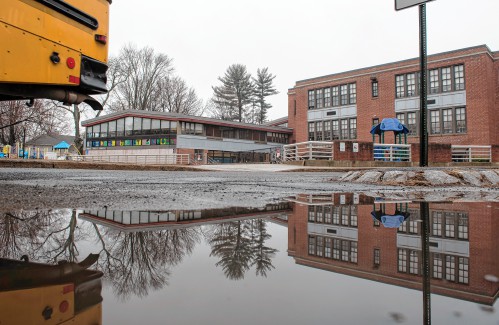
During winter, the plowing of the parking lot left a large area of the playground obscured from the eyes of teachers, who preferred to watch recess from the less snowy areas. Without better shoes — rugged winter boots, in fact — teachers missed the school’s biggest haven for bullying and teasing.
This school didn’t need a million dollar anti-bullying campaign; it needed a new map for the snowplow and more adult eyes on the playground.
As one of the co-founders of the Center for School Climate and Learning, an educational consulting group that works with school districts on comprehensive school climate reform, I never cease to be amazed at the profound impact that children can have in shaping the direction of our communities.
They have information we adults do not, energy we have no longer and ideas that would never have occurred to us in the first place.
It has been my privilege to be part of a team of clinicians and scholars who have developed a process that schools can use to promote positive changes in their school climate.
As much of this work relies on student leadership and community engagement, it is a process that can be replicated across many domains.
My work as a psychologist and school consultant has taken me all over the country, working with schools to address the elusive notion we think of as climate, the social and emotional environments where our children learn.
Not surprisingly, bullying is on many minds, and I am often asked, “How do you stop bullying?”
My answer is always “by starting something else.”
Just like academic problems, we need to understand the problem and from where it comes, and then develop new skills and strategies to address it.
We don’t teach children to stop reading badly; we work to improve their reading skills.
This academic notion can be applied behaviorally too.
Solutions do not lie in our ability to squash negative behaviors, but to promote more positive ones.
Whether it is parenting, teaching, or legislating, we often rely on prohibitions as a method of establishing and promoting community standards.
As a democratic society, we use laws to set forth common standards of behavior, the rules that citizens agree to follow.
Massachusetts’ recent anti-bullying legislation serves this purpose well by giving schools more guidance about which behaviors to target. But the anti-bullying law should be our back-up plan, used to address the outliers in an otherwise more proactive, positively oriented strategy.
The anti-bullying law, like any law, tells us what not to do, but fails to teach new behaviors and promote different values and norms. Legal prohibitions are different from social solutions, and this is the key to understanding the strategies needed to combat bullying.
The law is a good place to start, but to support our children as they adapt to an extremely fast-paced and changing world, we need to bring new, more socially responsible behaviors into our schools and communities.
Let’s discuss some things that might, in their small way, behave like antibodies in inoculating our children against bullying.
Some words that come to mind, concepts that have born out repeatedly in our work, are things like student engagement, student leadership, respect, tolerance, empathy, social justice, equality of opportunity and being heard.
Each of these notions represents a powerful tool for addressing problems with bullying. A school that is successful in increasing its students’ sense of empathy, for example, will almost certainly see a reduction in bullying and harassment among its students.
And when typical students begin to change their behavior, social norms shift, groups change, individuals feel stronger and more supported. No school-wide intervention will eradicate all problems, and outliers will continue to exist. But social trends in schools, and those that become part of the culture of bullying, do grow and change with our social and school climate.
Thus our climate and culture is the true target. The answer is not an anti-bullying program, but climate improvement.
There are no one-size-fits-all solutions to bullying in schools, and anyone who claims otherwise might be selling one. Human behaviors are as variable as we are, and individual schools, districts or communities must rely on specialized approaches that fit their own strengths and weaknesses.
Thankfully, our work over the past decade has taught us that there are common elements in an effective school climate change process that place schools and communities on a productive pathway.
Next week: Specific recommendations.
Christopher Overtree is a clinical psychologist, school consultant and professor of psychology at UMass. He directs the Psychological Services Center there and specializes in treating children, adolescents and their families. He is co-founder of the Center for School Climate and Learning (www.TheCSCL.org). He is the father of two boys and lives in Florence.
Thursday, February 10, 2011
By TESS DOMB SADOF
AMHERST — It only seems natural for students, the direct participants in bullying episodes, to be actively involved in the creation of anti-bullying policies, activities, and programs.
Yet, as schools rushed to meet the state-mandated Dec. 31 deadline to develop anti-bullying policies, there was no requirement to use student-initiated and student-focused activities to respond to bullying and to support witnesses to intervene.
This have may resulted in policies failing to reflect students’ thoughts, perspectives, and needs.
During my experience surveying elementary school students and interviewing high school students for "Student News," I learned that giving students the chance to share their experiences and ideas can educate and motivate them to organize around anti-bullying efforts.
Students can rise to the challenge. (At right, Tess Domb Sadof.)
They contribute honest, thoughtful insights and offer poignant experiences that schools and school officials can learn from and apply in programs.
While surveys and interviews give students an opportunity to share their input, schools need to take the lead and support programs that value student participation.
Schools can form anti-bullying student task forces around student schedules. They can establish programs that incorporate and amplify students’ meaningful and often incredible ideas about bullying.
And, student task forces need to be more than just a rubber stamp for school administrators. Student engagement shouldn’t be just a box to check off.
In my view, school administrators need to focus on using students’ ideas as the basis for their projects.
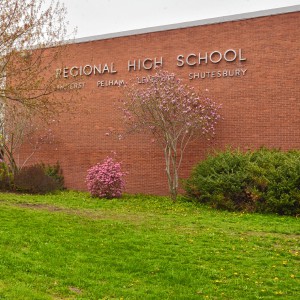
A great example of this was evident in the assembly students led at Hampshire Regional High School late last year.
By supporting a student-led assembly in which all students were welcome to participate in an open-mic discussion about bullying, the school succeeded in demonstrating respect for students’ experiences and fostering an environment based in action rather than apathy.
When people talk about bullying, they often forget about the role of the witness as an active intervener.
After all, bullying has long been defined as an act that happens between two individuals, the bully and the victim. We establish punishments and consequences for the bullies and create support systems for the targets.
However, bullying usually also includes witnesses or bystanders who often don’t know how to respond. In an effort to educate students on how to respond to bullying, elementary, middle, and high schools need to emphasize the role of the witness.
As I see it, witnesses hold great influence in the real and cyber worlds.
By responding or ignoring bullying, witnesses’ actions show either acceptance of the bullying or rejection of it. They hold the power in schools becoming caring and responsive communities.
Schools should lead the way in creating programs that provide witnesses with the tools and skills to effectively and successfully respond to bullying.
Some of these programs can be created by the school, and others, like MTV’s "A Thin Line" program, can be supported and publicized in the school.
In addition to focusing on the consequences, legal issues, teacher training and disciplinary responses to bullying in our schools, schools should welcome and use student input to create anti-bullying policies and programs that reflect students’ ideas, suggestions, and experiences about bullying prevention.
Tess Domb Sadof is a student at Amherst Regional High School.
Saturday, January 8, 2011
By MARU GONZALEZ
AMHERST — Let’s take a trip back in time to middle school. What did you see, hear, and think about young people who are lesbian, gay, bisexual or transgender (LGBT) — or being an LGBT ally?
What were you taught (or not taught) about LGBT people and communities?
If you were a target of bullying, witnessed others being bullied or even bullied others yourself, did staff intervene? More often than not, the answers to these questions are a resounding “NO!”
And with the slew of recent bullying-related suicides, this seems to be the trend across the nation.
Amherst Regional Middle School (ARMS) is taking steps to ensure a safe and affirming school climate.
From the affirming and supportive faculty to the social justice-minded curriculum, ARMS increasingly embodies what it means to be a “safe and respectful community.”
That community is reflected in the school’s recently established Gay-Straight Alliance (GSA) whose primary objectives are to cultivate a community of respect and raise awareness about LGBT issues.
As one student put it, “It’s good to have a safe space where you can go and be yourself.”
In addition to the club, the school is taking broader steps to combat anti-LGBT bullying. LGBT safe zone stickers have been placed on classroom doors throughout the building and the English department has developed a lesson on challenging anti-LGBT language.
Ultimately, this work is just one small piece of a larger effort to celebrate all students — not in spite of their differences but because of them.
As adults, we often forget (or try to forget) the difficult transition into adolescence.
At times, we find ourselves dismissing schoolyard taunts as “part of youth culture.”
Other times, we simply feel powerless in our ability to intervene or make a difference.
But we can start to “make it better” for students, as the Amherst Regional Middle School already has.
Maru Gonzalez works with the Stonewall Center at the University of Massachusetts.