Latest News
 Area property deed transfers, May 9
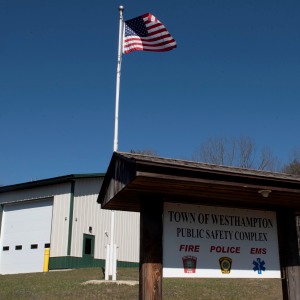 Solar project to top docket at Westhampton Town Meeting on Saturday
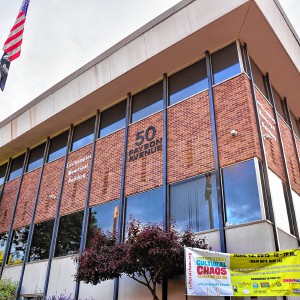 Easthampton to use built-up reserves to help cover $57.1M budget next year
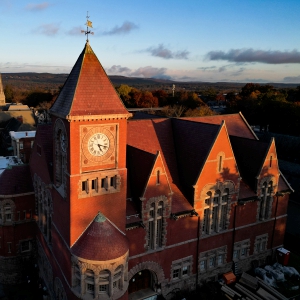 Town manager’s plan shorts Amherst Regional Schools’ budget
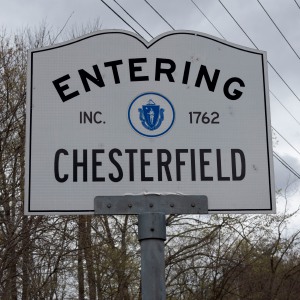 Fuller fends off challenge, wins 10th term on Chesterfield Select Board
 School assessment, electricity program among items on Pelham Town Meeting docket
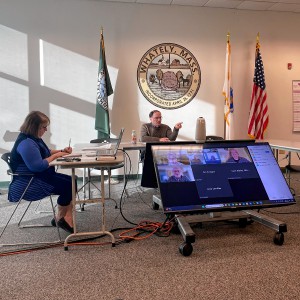 Easthampton native named Whately town administrator
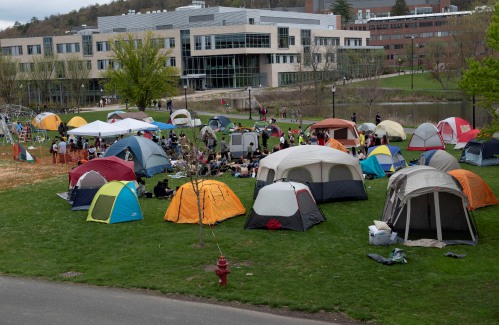
More than 130 arrested at pro-Palestinian protest at UMass
Editor’s note: This story will be updated. AMHERST — More than 130 people were arrested on the University of Massachusetts campus Tuesday night after those who set up a pro-Palestinian encampment on the South Lawn of the Student Union refused to...

Sharing a few notes: High schoolers coaching younger string players one on one
AMHERST — Carefully holding and balancing his violin, 12-year-old Heedo Noh, a Fort River School sixth grader, gets a suggestion for positioning the bow so it runs straight across the strings as he practices G.F. Handel’s “Chorus from Judas...
Most Read
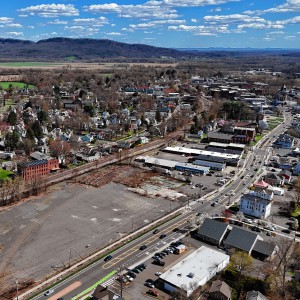 Northampton bans auto dealerships near downtown; zone change won’t affect Volvo operation on King Street
 Proposed Hatfield pickleball/tennis building raising eyebrows
 South Hadley man killed in I-91 crash
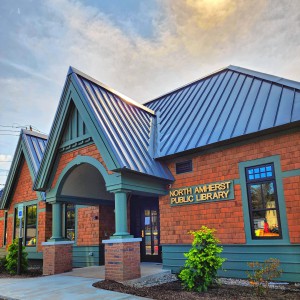 ‘Home away from home’: North Amherst Library officially dedicated, as anonymous donor of $1.7M revealed
 Police respond to alcohol-fueled incidents in Amherst
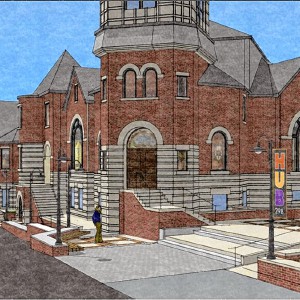 Public gets a look at progress on Northampton Resilience Hub
Editors Picks
 A Look Back, May 8
 Guest columnist Cathy McNally: Northampton School Committee standing up for children
 Karen Gardner: We all deserve a break
 The Beat Goes On: A trombone celebration in Holyoke, Lord Russ shifts gears, and the Hampshire Young People’s Chorus turns 25
Sports
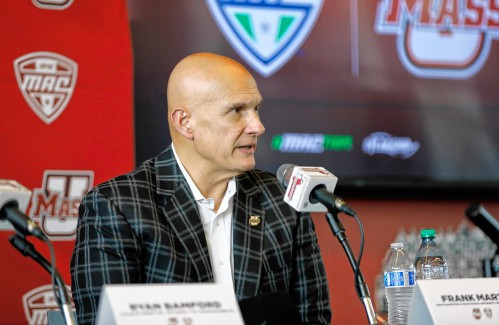
UMass basketball: Bryant forward Daniel Rivera to be Minutemen’s first transfer of the offseason
Just days after UMass forward Matt Cross announced his transfer to SMU – the fourth player to transfer away from the program this offseason – the Minutemen finally added their first piece to the 2024 roster on Tuesday night.Bryant’s Daniel Rivera...
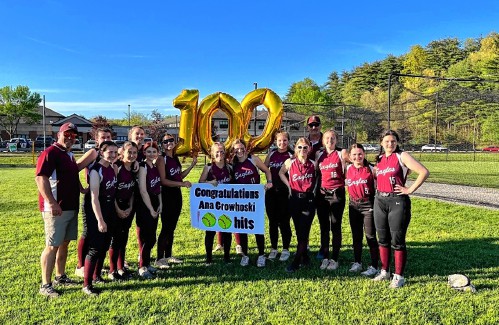 High schools: Ana Growhoski records 100th career hit in Easthampton softball’s win over East Longmeadow
 Softball: Willow Hicks, Angela Magyar power Gateway past Amherst 8-1
 Boys volleyball: Carey twins help power Frontier past Belchertown in straight sets (PHOTOS)
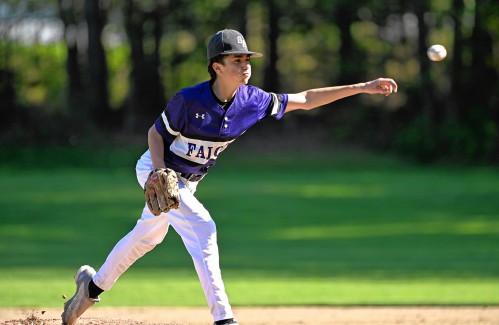 Baseball: Smith Academy edged by Logan Moore, Mohawk Trail in 1-0 loss (PHOTOS)
Opinion
Guest column: Serving educational needs shouldn’t be ‘aspirational’
The School Committee recently passed a level services budget requiring an increase in its share of the city’s budget. My colleagues and I voted 8-1 — with the mayor abstaining — to pass this budget. We did so because we understand the challenges...
 My Turn: Gaza and lies
 Guest columnist Mariel E. Addis: Pride and prejudice
 Guest columnist Gene Stamell: We know what we know
 Jennifer Dieringer: Budget must serve whole city

Business

Area property deed transfers, May 2
AMHERST Faheem Ibrahim Lt and Faheem Ibrahim to Nan Zhao and Zhihong Ni, 16 Arbor Way, $738,000 Richard B. Spurgin to Yg Pleasant LLC, East Pleasant Street, Lot 1, $218,000 Richard B. Spurgin to Yg Pleasant LLC, East Pleasant Street, Lot 2,...
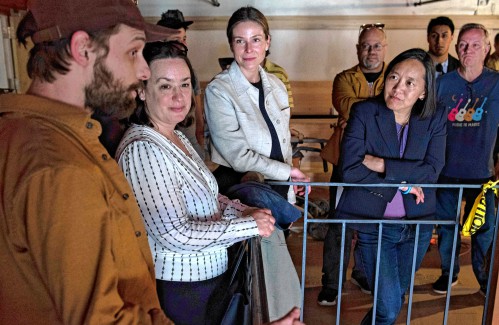 Music key to Northampton’s downtown revival: State’s top economic development leader tours city
 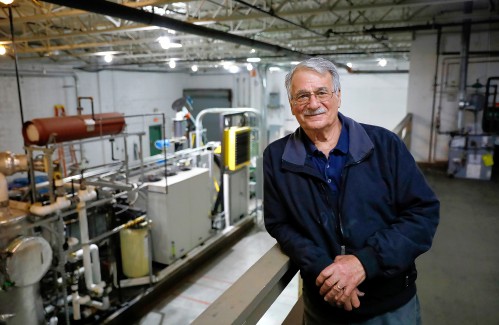 Locking up carbon for good: Easthampton inventor’s CO2 removal system turns biomass into biochar
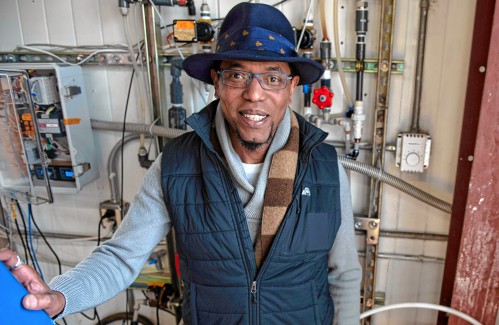 Advancing water treatment: UMass startup Elateq Inc. wins state grant to deploy new technology
 New Realtor Association CEO looks to work collaboratively to maximize housing options
e-Edition
Arts & Life

Speaking of Nature: Capturing my Bermuda nemesis: The Great Kiskadee nearly evaded me, until I followed its song
We’ve reached that point in the school year when it is actually painful (I mean physically painful) for me to leave my yard in the morning. May is the true month of the reawakening and blooming of Nature’s splendor and last week she was in full...
 Easthampton author Emily Nagoski has done the research: It’s OK to love your body
 Earth Matters: Honoring a local hero: After 40 years, Hitchcock Center bids farewell to educator and creative leader, Colleen Kelley
 Valley Bounty: Delivering local food onto students’ plates: Marty’s Local connects farms to businesses
 Let’s Talk Relationships: Breaking up is hard to do: These tools can help it feel easier
Obituaries
 Eli Knapp Abrams
Florence, MA - Eli Knapp Abrams, of Florence Massachusetts, passed away suddenly on Monday, April 22nd, 2024 in Goshen, MA. Eli was born in Beverly, MA on March 19th, 2003. He is the cherished son of Jennifer and Maury Abrams, and belov... remainder of obit for Eli Knapp Abrams
 Wilford J. Morton Jr.
Wilford J. Morton, Jr. Belchertown, MA - Wilford J. Morton, Jr., beloved husband, father, and friend, passed away peacefully on April 14, 2024, at the age of 85. Wilford was born on September 17, 1938, in Waltham, Massachusetts, to his p... remainder of obit for Wilford J. Morton Jr.
 Gary L. Campbell
South Hadley, MA - Gary L. Campbell, 70, of South Hadley, passed away surrounded by his loving family on Wednesday, May 1, 2024, in Sarasota, FL. Born in Holyoke, Gary was the son of the late Doris (Burnett) and John Campbell. He spent ... remainder of obit for Gary L. Campbell
 Joyce Marion Orzel
Easthampton, MA - It only makes sense that the word "joy" sits at the beginning of her name. Joyce Marion Orzel passed away on April 25, 2024. Bringing joy to the everyday was her superpower. She was born in Holyoke on January 26, 1946... remainder of obit for Joyce Marion Orzel