Tuesday, February 21, 2012
I only had to say why I was calling.
Hearing the name Silvio Ottavio Conte, the subject of my Feb. 17 Hampshire Life story, sent people back 20 years — and got them talking.
I didn’t have the space in the magazine to share all of their stories, so here’s a postscript with additional recollections and perspectives from former Gov. Jane Swift, U.S. Rep. Richard Neal, Mary Wentworth of Amherst and Jonathan “Jay” Healy of Charlemont.
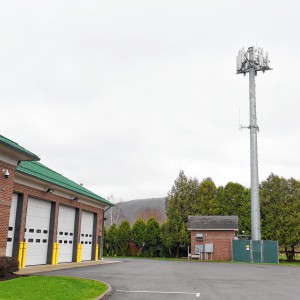
Healy was a Republican state representative in 1985 when people in his district united to oppose a plan by the U.S. Air Force to erect 70 communications towers on potato fields at the Ashfield-Hawley border.
On July 5 of that year, Conte, wearing a tie and light-colored fedora, climbed onto the back of a pickup to announce that the Air Force would have to look elsewhere.
“I have met with key persons who control the purse strings and convinced them that we should deny funding to this project,” he said that day to cheers, as people huddled near rugged lines of weather-beaten maples that would have been dwarfed by the towers.
“This project is dead.”
Healy recalls Conte wasn’t sure at first whether protesters were in the right. “He looked at both sides of the issue and listened to a lot of people. He wasn’t with us initially. But in the end, he said, ‘You’re right.’ ... He was open-minded about things that might be solutions to problems.”
In Healy’s view, no one then could have predicted how party lines today would obstruct that hunt for answers.
“It would be an experience like going to Mars,” Healy said, comparing the politics of 1985 with those of today. “The values he embodied were 180 degrees opposite what we see in this sad fight and perpetual war between Republicans and Democrats in Washington, D.C. He was someone who tried to figure out where the middle ground was. It’s totally foreign to what we see in Congress and on Capitol Hill right now.”
Healy adds, “The party and the values he stood for are no longer seen in the Republican Party on any level and that’s really sad. ... He’d definitely be a Democrat.”
Healy, state director for rural development for the U.S. Department of Agriculture for three New England states, offers that view of the Republican Party having gone through his own political transformation. Healy dropped his Republican enrollment about a decade ago after concluding the party no longer lined up with both his fiscal conservatism and social progressivism. “The Republicans have just moved so far away from what they were.”
If Conte were still in Congress, Healy believes he would be a champion of a spirit of compromise and cross-party lawmaking.
“He would be a brawler and call out some of the hypocrisy and almost downright idiocy of people who are governing on a platform of blocking nearly everything. I think he would really be dismayed by what is happening. He was a maverick who called them as he saw them. I don’t know if those would be even tolerated in this day and age. He wouldn’t have changed his values and ways of working with people to find reasonable solutions for the greater good. He was a leader and not a follower and that was one of his great strengths.”
U.S. Rep. Richard Neal, the Springfield Democrat whose home city moves into the 1st Congressional District under redistricting, says older residents in western Massachusetts remember Conte well. But he believes it would be hard to get their grandchildren to grasp how Conte was able to remain viable, as the only Republican member of the Massachusetts Congressional delegation and how he ran several times under both the Republican and Democratic banners on November ballots.
The ability of the two major parties to line up like that would seem a puzzling artifact from a dusty time long ago, Neal suggests. “If you tried to explain that to a political science class, they’d think you were talking about the Magna Carta.”
Mary Wentworth of Amherst, who took on Conte several times at the polls, once came in behind the Republican in a September Democratic primary.
She recalls challenging him at one election forum about the fact that he had initially voted against Medicare in the 1960s. As someone trying to unseat a powerful incumbent Republican, Wentworth says she grew accustomed to hearing two things.
In Berkshire County, she said, some declined to sign nomination papers for her because a Conte staffer might see their names in the filings — and there could be consequences.
“In this part of the district, people thought, ‘Oh, Silvio is a Republican, but that’s as good as having a Democrat.’”
The challenge Wentworth faced: convincing them that it mattered, and that while Conte had a good record of scoring funds for Planned Parenthood, he was staunchly anti-choice.
In her view, his Republicanism allied him with forces that sought to benefit businesses and the wealthy. “He probably would not go to the lengths that Republicans have gone to in the present to maintain such a disparity, because he grew up pretty poor.”
Jane Swift, the former Massachusetts governor and a Republican, recalled her family connection with Conte. Their families knew each other in Pittsfield’s “The Hill” neighborhood and Conte had played high school football with her mother’s uncle.
In an interview from her family’s horse farm in Williamstown, Swift noted the breakdown in civility between political parties. Conte’s era simply allowed — or expected — more fellow feeling among those in Congress, Swift notes, and that feels like a long time ago in light of today’s media hothouse, in which news organizations chase stories 24/7 and often treat politicians as celebrities, she says, rather than as leaders.
“The immediacy of the news cycle rewards bad behavior — it’s hard to break through unless you do something really bad. He represented a different era,” she said of Conte.
The difference could be seen March 12, 1991, when leaders across the political spectrum, from Tip O’Neill to vice president Dan Quayle, attended Conte’s funeral, four days after his death. The funeral drew Sox great Carl Yastrzemski, who served as a pallbearer, as well as Gov. William Weld, House Speaker Thomas S. Foley leading a 50-member delegation from Congress, Sens. Edward M. Kennedy (who said of him: “He really is one of the can-do members of the House”) and John Kerry, and House Minority Leader Robert H. Michel.
“Just the amount of respect that he garnered,” Swift said. “But also, so many people would tell you that he didn’t let his power — and it was immense — influence his character. He never forgot where he came from.”
Wednesday, December 14, 2011
ASHFIELD -- By late February each year, Nan Parati of Elmer's Store in Ashfield is accustomed to fending off customers' winter blues. Cabin fever is an age-old New England malady.
Parati and a team assembled in this Hilltown believe they have a cure: a new concert that will bring sounds, sights and tastes of New Orleans into Ashfield center for a long weekend.
"I thought, we've got to do something about this," Parati said of the sour moods she encounters. "Because I don't want to be yelled at any more."
The remedy is Winklepicker, an event running Feb. 17-19, a time of year billed by its promoters as "When New Englanders Go Barnyard Crazy."The headliners for the weekend are Buckwheat Zydeco, the New Orleans musician credited with bringing that Cajun-inspired music to the world; singer-songwriter Chris Smither, a New Orleans native who now lives in Amherst; and Primate Fiasco, a Valley band known for its psychedelic Dixieland spirit.
Organizers Parati, Carol Young and Jim Olsen felt they needed a memorable name for their event, which they hope will be held yearly. With famed festivals like Bonnaro and Sasquatch out there as examples, they came up with a long list of possible names and settled on one that refers to the long-toed shoes favored by England's "Teddy Boys" and which got their name for resembling the picks used to pull "winkles," or snails, from their shells.
Along with music, the Winklepicker fest will include three days of lessons in New Orleans cooking, a Mardi Gras costume exhibit and reception, a gospel brunch and a four-hour Mardi Gras music camp for children aged 10 to 15.Participants in that camp will perform an opening number for the Buckwheat Zydeco show that starts at 7 p.m. Feb. 18.
Michaela O'Brien, who is handling publicity for the festival, acknowledged the difficulty organizers face in drawing a crowd to Ashfield in mid-winter and in establishing an annual event. But she suggested that its uniqueness, and the appeal of a Mardi Gras celebration, will help."This is a one-of-a-kind event that is growing right here," O'Brien said.
On Tuesday, organizers invited Smithers to perform a few songs at Elmer's to give a taste of what he brings to Winklepicker. Smithers took a seat near the back of the store. Wearing his own version of sleek black shoes, he tapped out percussion lines for three songs in his blues-infused folk, blending in intricate finger-style guitar work.
A few minutes later, refueling with a maple-glazed pastry, Smithers said a New Orleans-inspired event has to let its hair down.
Celebrations in his home town down south, he said, are "a public manifestation of what people experience all the time in New Orleans. Music is in the street, it's everywhere," Smithers said.
"They would rather have a good time than take care of business. Basically it's a to-hell-with-it attitude," he said. "In limited doses, it's kind of charming."
Before Smithers gets back to Ashfield, he will go into the studio in January to record his 14th album. He'll also teach guitar at workshops that Jorma Kaukonen of Hot Tuna and Jefferson Airplane fame will convene in Hawaii.
Olsen, who runs Signature Sounds and books talent for the Green River Festival, said he had been planning a zydeco show in Turners Falls this winter. When he learned of Parati's wish to create a yearly event with New Orleans connections, the two teamed up and brought in Young, who has produced concerts for decades and now runs her own company, Mighty Albert.
The two music events at the town hall Feb. 18 will conclude with an "after party" at Elmer's featuring Primate Fiasco. "We're going to see how late Ashfield's willing to party," he said.
Young noted that Ashfield Town Hall has a capacity of about 400, but she was reluctant to set a goal for the new festival's audience. "The sky's the limit," she said. "We want to turn people away, and have them think, I should have bought tickets earlier."
Tickets are available at www.mightyalbert.com. They range from $25 in advance for individual concerts by Buckwheat Zydeco and Smithers to $35 for all musical events and $199 for all festival events, including the three cooking workshops. Separately, the cooking classes are priced at $65 each or $175 for all three.
Saturday, November 5, 2011
On Thursdays, I stop by WHMP-AM in Northampton and spend a few minutes in the studio with morning show host Bob Flaherty.
Bob, who jumped ship at the U.S.S. Gazette a few weeks ago, has started a regular radio segment featuring recent letters to the editor of the Gazette. I describe a few recent ones and then we are joined, in the studio or by phone, by the author of a letter or guest column.
Here are recaps and links to the letters we discussed on Nov. 4, when Smith College political science professor Greg White came to speak about the prospect of casino gambling.
The segment will air at 1400 AM (and 96.9 FM) the week of Nov. 7.
-- Steve Funderburk of Pelham: Steve wrote in to join the ongoing debate about whether Amherst should continue to allow unleashed dogs at the Amethyst Brook Conservation Area. His point: Suggestions that people unhappy with the practice are exaggerating the dangers are unfair. He says he has a scar to prove that loose dogs can injure people. The town's Conservation Commission revisits this issue soon.
-- Malcolm Pradia of Sunderland:Malcolm, a social work intern in an area middle school, wrote in to suggest that far too many students go home to empty homes and apartments. He asks, where are the boys and girls clubs that can provide a sense of community outside of school?
-- Philippe Galaski of Amherst: Philippe praised work by the Northampton Rotary Club to combat polio worldwide, an effort described in an Oct. 24 guest column by Eric Lucentini. But in a letter, Philippe took issue with some of the terms, like "withered," that were used to describe the effects of this disease.
-- And Greg White: On air, Greg describes what he saw, as a resident of Philadelphia, play out in New Jersey, after casinos elsewhere began to draw customers away from the shore. His letter also challenges state political leaders on undue influence that the gambling industry may be bringing into the Legislature.
Keep those letters coming! Email to opinion@gazettenet.com or mail to PO 299, Northampton, MA 01061.
Thursday, September 15, 2011
“I don’t know.”
David Lenson, director of the comparative literature program at the University of Massachusetts, is willing to bet most undergraduates at his school will go four years without hearing a professor say those three words.
And he blames that, in part, on a pedagogical fallacy born in ancient Greece that he did his best to puncture in a talk Wednesday to a capacity crowd in the Campus Center Auditorium. Ranging from Greek philosophy to modern college teaching, Lenson lampooned faculty who claim to embrace the Socratic method of teasing out knowledge through escalating questions.
Lenson believes that sacred cow of instruction is more of an ass.
(David Lenson, left; Collegian photo)
“The Socratic method is a kind of veiled authoritarianism in the classroom,” said Lenson, who has taught at UMass for 40 years and is known for his acerbic and erudite lectures. “This has infected all of us to some degree.”
“The Socratic method knows the conclusion that it wants to reach … and will slowly, gradually reel you in until you give consent to it,” Lenson said.
Enacting a passage from Plato’s work, Lenson imitated a sheep bleating out agreement to questions posed by Socrates. “He just keeps asking what lawyers would call leading questions,” he said of the philosopher.
In his view, that results in his supposed conversational “antagonists” slowly “taking the opinion that Socrates had all along” without ever challenging flaws in his assertions. And that, Lenson suggested, is no high and righteous road to learning.
Lenson’s talk, called “The Great Lie of Ideals: From Plato to General Education,” kicked off a four-part series in the Commonwealth Honors College Faculty Lecture Series. Among the hundreds of students listening Wednesday night were many who have been struggling their way through “The Republic” as assigned reading for the honors program.
Lenson assured them that Plato, while praised, is not generally understood. He listed many grievances with Plato, but hammered away at problems he has with the vaunted Socratic method, which he suggested has come down through the ages with an undeserved halo around it.
That method, he said, as practiced by its creator, is a demeaning, passive-aggressive approach to instruction that is less a free exchange of information than a slow force-feeding of fixed ideas.
(Socrates, in a bust at the Louvre in Paris.)
At one point, Lenson imitated a professor who insists he doesn’t lecture (Yes, Lenson interjected, “Lecturing blows”). Mimicking this professor’s tone (superior, a little whiny and with the trace of an English accent) Lenson said this teacher prefers to engage, like the great Socrates, in what he hopes are eye-opening exchanges with students.
“This would be a nice idea, if that’s what the Socratic method was,” he said.
As for “ideals” in Plato’s work, Lenson painted the society the Greek thinker favored as far closer to totalitarianism than democracy, noting that it advocated censorship and entrusted its elites, not common people, with political power. Plato’s “Republic,” Lenson argued, resembled the harsh state of Big Brother that George Orwell imagined in his novel “1984.”
“He has left a legacy of totalitarian thought,” Lenson said of Plato, “that we have never lived down completely.”
Tuesday, August 9, 2011
Before summer clocks out, hikers and bicyclists should know about a valuable resource newly available from the Pioneer Valley Planning Commission.
The Springfield outfit this spring released a new map for hikers and cyclists that’s available at a slew of local outlets.
The commission’s regional trails map pinpoints our area’s top hiking and biking trails, both in Hampshire and Hampden counties.
The map includes narrative passages that describe the features of each trail system. As the commission notes, the map is meant to be inspirational as well as informational.
“This map is designed to encourage residents and visitors alike to get outdoors and experience the incredible opportunities for recreation, exercise, and enjoying nature on the area’s beautiful hiking and bicycling trails,” it says in a statement. “The Pioneer Valley region has an extraordinary bounty of natural beauty — and trail systems designed to help the public enjoy it.”
Among the routes detailed are the New England National Scenic Trail, the Connecticut Riverwalk and Bikeway, the Norwottuck Rail Trail and routes along the Westfield National Scenic River.
"We've actually been selling quite a few of them," a staffer at Food for Thought Books in Amherst said today. "They've been very popular."
The map, titled the "Pioneer Valley Trails: A Hiking and Biking Guide," is available at the following locations: Amherst Books and Food for Thought Books in Amherst; Adventure Outfitters in Hadley; Broadside Books, Don Gleason Camper’s Supply, and Booklink Booksellers in Northampton; The Odyssey Bookshop in South Hadley; and other retailers. It costs $7.99.
Friday, July 8, 2011
Next Tuesday, a funeral will be held for the Rev. Paul Archambault, a Northampton native who died of a self-inflicted gunshot wound last weekend at his home at the Our Lady of the Sacred Heart rectory in Springfield.
After plans for that service were announced, the Gazette heard from people who wondered about the church’s policy in cases of suicide. At one time, the Roman Catholic church took a firm stance against granting such rites to people who take their own lives. But that is no longer the case, according to Msgr. Christopher Connelly, the vicar general of the Springfield diocese.
“This is certainly a most sensitive issue, and no doubt one in which our Catholic understanding has evolved over time along with a better understanding of mental illnesses,” he said in an email message, in response to questions from the Gazette related to Rev. Archambault’s death.
“To be certain the sanctity of human life is held in the highest regard because as people of faith we believe every individual is created in God’s image,” Msgr. Connelly said. “The factor here which must be considered is the mental capability of the person.”
Bishop Timothy A. McDonnell acknowledged the priest’s personal struggles in a message he issued this week. The bishop called Archambault, 42, a devout person who was “a good and pastoral priest” and “a caring chaplain.”
“Yet, he was not immune to illness. Most of us realize that physical illness can be fatal; we sometimes forget that the same is true of illnesses that have no physical cause but wrack the spirit still,” the bishop said.
The bishop continued that public message this way: “We pray our merciful God bring Father Paul safely home, rewarding all the good he accomplished and relieving the burdens he found unbearable. May he rest in peace.”
A passage in the Catechism of the Catholic Church states that mental anguish can so affect a person as to relieve him or her of blame for suicide. Paragraph 2,282 in that document reads, “Grave psychological disturbances, anguish, or grave fear of hardship, suffering, or torture can diminish the responsibility of the one committing suicide.”
Msgr. Connelly said that Tuesday’s services for Rev. Archambault communicate to all that, as he put it, “We are never to despair of God’s mercy.
“In offering Christian burial rites, the church offers hope and healing to a grieving family and community and entrusts the soul of the faithful departed to God,” the monsignor said.
Rev. Archambault’s funeral will be held at 11 a.m. at the Church of St. Elizabeth Ann Seton Parish on King Street in Northampton. A wake will precede it Monday from 4 to 7 p.m.
The funeral liturgy will be celebrated by Bishop McDonnell himself.
Saturday, May 28, 2011
AMHERST -- With World War II under way, just 13 seniors attended graduation at Amherst College one spring, the smallest number to walk for their degrees since 1823.
Through the war years, Amherst students, including my father Henry, spread to the corners of the world to serve.
Their college days were fractured and scores of classmates died in combat. Still, my father's Class of 1946 hung together.
Its members remain connected to one another and the college.
As they gathered for their 65th reunion this weekend, these 80-somethings celebrated a feat pulled off in four months -- raising $30,000 to help the college create a special room in the Robert Frost Library that will help keep this generation's service front and center for students today.
"World War II was a very significant event not only for the country but for virtually everyone on the campus when we came here," Josh Watkins, president of the Class of 1946, told classmates, other graduates, spouses, families and college officials in a ceremony Saturday afternoon.
(For a slideshow, click here and select "slideshow" on Picasa site.)
The WWII Library Study Room project, when complete, will offer a space for individual or group work on the library's third floor, along a bank of windows on the building's west side. The effort is being rolled in to a wider renovation project aided by a gift from departing President Tony Marx.
On Saturday afternoon, these alums and veterans and their friends browsed a small display set up in the space and, in an event downstairs, heard from college officials and a member of the Class of 2012 who attends Amherst on a special veteran's scholarship.
That current student, Jacob Worrell, served as a sergeant in the U.S. Army's 172nd Stryker Brigade and helped patrol Baghdad. He transferred to Amherst from Middlesex Community College, and is a philosophy major.
Worrell warned of the consequences today of what he termed the military-civilian divide -- and how with just 1 percent of the U.S. population ever wearing the uniform, it's no surprise that most Americans do not understand the nature of military service.
Several dozen listeners in the library gasped when Worrell noted that 1 of every 5 suicides in the U.S. today involves a military veteran. While members of the Class of 1946 returned to a grateful nation, veterans come home today to long waits for benefits and high unemployment.
Worrell said his Amherst classmates have a hard time understanding what he faced in Iraq. And they would struggle to grasp the world that members of the Class of 1946 inhabited.
"They cannot even fathom the dynamic that existed on campus at that time," he said, referring to World War II. Worrell (at left) said he hopes the new study area helps students understand how military service was, for many Amherst classes, a nearly universal experience. From there, he hopes students pay more attention to contemporary military issues.
"The future security of the nation depends on it," he said.
Gregory S. Call, the college's dean of faculty and newly named interim president, reminded the audience that 25 percent of the college's faculty joined with students in serving in the military in the 1940s.
"You know this well," he said. "You lived it."
Call noted how quickly the Class of 1946's gift of the study room came together. "I think it shows how much you care about this institution. It means a lot to all of us."
It is particularly unusual, Call said, for a class so long out of school to do so much. "That's not something that typically happens. It really is a special class."
Bryn I. Geffert, the librarian of the college, predicted that the WWII room will be well used, since students these days like to work together. He said the space will "foster the camaraderie for which your class is so well known. ... This is an extraordinarily generous gift."
Carole Cunningham, who works in development for the college, welcomed members of the class and praised their contributions. She too noted the speed with which the project came together. "They jumped in at the chance to support this," she said.
They took the beach, in other words, and got it done.
Monday, May 23, 2011
If something's bugging you about cockroaches -- and what wouldn't? -- a UMass professor's website is the place with answers.
A column in the St. Petersburg Times newspaper in Florida last Friday tapped in to Joseph G. Kunkel's online roach-a-pedia to answer the question: "Why is it that whenever I find a dead cockroach, it is upside down?"
According to Kunkel, most cockroaches only seem to die on their backs, the newspaper reported, because in fact most expire when they are targeted by predators like bats and birds, which find them a good protein source.
However, when the bugs get inside homes, they have trouble negotiating slippery floors and can die trying, unsuccessfully, to right themselves if they turn onto their backs. (Just ask Gregor Samsa.)
Add to that scenario the fact that cockroaches that ingest insecticides may flip over due to the effect of the nerve poisons such products contain.
As Margot Clearly of the Gazette explained in a Hampshire Life story in 2009, Kunkel has been delving most recently into the question of a shell disease afflicting lobsters off the coast of New England, trading, as she put it, “the crispy casings of cockroaches, the crunchy shells of lobsters.”
Still, Kunkel maintains a seemingly exhaustive set (80, so far) of frequently asked questions about cockroaches, with answers to queries like: Can cockroaches predict earthquakes?
How can I tell if a cockroach is breathing? Where did the cockroach get its name?
And my favorite: Do cockroaches have emotions?
Which begs the follow-up: Does anyone care?
Kunkel, a biology professor, collects more than straight facts on cockroaches.
His site offers up a full version of Muriel Rukeyser's poem "St. Roach," which begins:
For that I never knew you, I only learned to dread you,
for that I never touched you, they told me you are filth,
they showed me by every action to despise your kind;
for that I saw my people making war on you,
I could not tell you apart, one from another,
for that in childhood I lived in places clear of you,
for that all the people I knew met you by
crushing you, stamping you to death, they poured boiling
water on you, they flushed you down,
for that I could not tell one from another
only that you were dark, fast on your feet, and slender.
Not like me.
Wednesday, May 18, 2011
The Arizona Republic newspaper reports today that Jacob Edgar Wideman, son of former UMass professor and author John Edgar Wideman, lost his bid to win parole after serving 25 years for killing a fellow camper while in Flagstaff, Ariz., in 1986.
At a hearing Tuesday, Jacob Wideman, now 41, said he did not plan to pick up a knife and stab Eric Kane in a hotel room while on a trip through Arizona a quarter century ago as part of a tour of national parks. Both Wideman and his victim were 16. (At left, Jacob Edgar Wideman.)
The proceeding before the Arizona Board of Executive Clemency drew Wideman's father and Kane family members, who spoke against allowing Jacob Wideman to go free this fall. He will be eligible for parole consideration again in a year.
"I am stunned still by what happened 25 years ago," the Arizona Republic article, by Michael Kiefer, quotes John Edgar Wideman as saying in the parole hearing. "I find myself unable to speak about it to the (family). I can only prostrate myself before them and say good luck."
His daughter, Jamila, spoke before the board, as did Jacob Wideman's mother. The five-member board's vote against parole was unanimous.
In his application for parole, and in remarks to the board, Wideman said he has overcome his mental-health problems and wants to work with children and in the field of mental-health care.
Kane's family spoke strongly against his release. "I think he's a sociopath," Louise Kane, the victim's mother is quoted as saying in the Arizona Republic article. "Anyone who could kill for no reason at all, other than that he had violent thoughts and impulses, shouldn't be in society."
The killing came a year after John Edgar Wideman published "Brothers and Keepers," a memoir about the different roads he and a brother took from a Pittsburgh ghetto. While John Edgar Wideman attended an Ivy League college and became a Rhodes Scholar and author, his brother ended up in prison serving, like his son later would, a life sentence for murder.
Tuesday, May 17, 2011
Days after his office resolved felony cases against teens accused of bullying Phoebe Prince, the local DA became a marked man.
A group in Georgia called Children Without A Voice USA started an email campaign to call for Northwestern District Attorney David Sullivan to be voted out of office "before another child dies."
(David Sullivan, second from left in photo, speaks after the Prince cases were resolved; Kevin Gutting photo.)
The Gazette has so received received six form letters with passages like the following:
"American's should care more about the well being of our children, civil rights laws and human life, sadly it doesn't seem like it is. Is it because children have little political value, or just less value compared to an adult female or male?"
All contain the same mistake in using an apostrophe to attempt to make "Americans" plural. In responses to the senders, I explained that the Gazette does not publish form letters.
None of the senders responded, suggesting that the letters were generated automatically by the 4-year-old nonprofit group, which is based in Alpharetta, Ga., and claims to be "dedicated and determined in fighting crimes against children in the United States."
On its website, people can sign up to participate in "action alerts" by supplying their email addresses.
The outfit lists email addresses for letters to the editor of the Gazette and the Republican of Springfield and also calls for volunteers to send messages to Sullivan himself.
I have a message in to Lin Seahorn, the group's founder and executive
director, and if she responds I will share her explanation of what the group hopes to
accomplish here.
The group's take on the Prince case boils down to the apparent belief that the resolution of the Prince case prosecutions two weeks ago encourages bullies across the country.
Other passages from the form letter:
In Massachusetts, several students were so relentless and cruel to the point that a beautiful young child took her life. A precious innocent life, all because of what she looked like on the outside. What's worse is that District Attorney David Sullivan failed Phoebe Prince, the community, Massachusetts and the rest of this nation with dropping all charges but for one, a misdemeanor ... like a traffic ticket. Would he have done the same, had it been his little girl?
Instead of extra sanctions, Phoebe's killer-bullies got triple-level discounts, as if the very things that made their actions especially offensive, were perversely calculated, instead, as mitigating factors.
Young people everywhere who heard about the felony charges when DA Scheibel first announced them might have refrained from bullying out of fear that major criminal sanctions would follow. They will no doubt laugh now in the face of warnings from school officials and cops that bullying carries 'serious consequences.'
With the whole world watching, there's a good chance this embarrassing result will void many of the good things that followed Phoebe Prince's death, as when communities rallied to support Phoebe's family and people demanded better laws to protect other victims from a similar fate. ... Here's hoping the public's angry reaction and continued fight for justice for Phoebe will now spawn a movement to vote District Attorney David Sullivan out of office before another child dies.
The group does not show up on the main online rating services for charities and philanthropies.
In a message on its site to potential donors, Children Without A Voice USA offers this promise on how money will be used:
"$ 50 allows us to teach 1 dozen children on how to keep their bodies safe
$ 75 allows us to distribute 200 educational materials on Bullying, teen suicide, or drugs
$ 100 allows us to teach 1 dozen parents, on parenting.
$ 500 allows us to teach 50 parents, on parenting.
$ 1,000 allows us to teach nearly 500 children, on how to keep their bodies safe.
$ 3,000 allows us to teach Bullying to an elementary school (approx. 750 students)"
Part of the group's mission statement reads: "Children Without a Voice USA seeks to become an organization of national scope. We will establish a presence in every state through a network of dedicated volunteers. Together, we will strive to reduce the number of children affected by violence, abuse and neglect through our focus on prevention, education and advocacy."
Sunday, May 15, 2011
University of Massachusetts grad Audie Cornish, a National Public Radio reporter since 2006, will take over the anchor chair of NPR's Sunday morning news and feature program, the network announced this past week.
Cornish is a 2001 grad of UMass. This fall, she will step in to the Weekend Edition Sunday job that Liane Hansen has held for 22 years.(At left, Audie Cornish; photo by Steve Barrett of NPR)
The assignment means the end of any late Saturday nights for the new host. In a conversation this week that can be heard on an NPR blog, Hansen notes that her rule on Saturday night -- to ensure a wide-awake start Sunday -- "is to be horizontal by 8 p.m. and unconscious by 9."
Valley listeners may recall Cornish's service with WFCR as an intern while at UMass, a tenure that UMass Magazine described in 2001. Cornish also interned during college with NPR in Washington. While in Amherst, she had earlier worked for campus radio station WMUA.
After school, she took jobs with the Associated Press in Boston and with WBUR, a public radio affiliate.
Her work with WBUR lead to her move to NPR in 2006. Cornish spent three years based in Nashville covering the American south. She and her husband, former Gazette reporter Theo Emery, moved to Washington in 2009 when she became a Congressional correspondent.
Emery is now a national political reporter with the Boston Globe.
In early April, Emery appeared on a WRKO radio program to talk about the potential of a government shutdown.
Though Cornish won't start fully as anchor until the fall, she is expected to make appearances on the program over the summer. Hansen departs after May 29.
Sunday, May 15, 2011
University of Massachusetts grad Audie Cornish, a National Public Radio reporter since 2006, will take over the anchor chair of the Sunday morning news and feature program, the network announced this past week.
Cornish is a 2001 grad of UMass. This fall, she will take over Weekend Edition Sunday from Liane Hansen, who has hosted the show for more than two decades.
The assignment means the end of any late Saturday nights for the new host. In a conversation this week that can be heard on an NPR blog, Hansen notes that her rule on Saturday night -- to ensure a wide-awake start Sunday -- "is to be horizontal by 8 p.m. and unconscious by 9."
Valley listeners may recall Cornish's service with WFCR as an intern while at UMass, a tenure that UMass Magazine described in 2001. Cornish also interned during college with NPR in Washington. While in Amherst, she also worked for campus radio station WMUA.
After school, she took jobs with the Associated Press in Boston and with WBUR, a public radio affiliate.
After joining NPR in 2006, she spent three years based in Nashville covering the American south. Cornish and her husband, former Gazette reporter Theo Emery, moved to Washington in 2009 when she became a Congressional correspondent.
Emery is now a national political reporter with the Boston Globe.
In early April, Emery appeared on a WRKO radio program to talk about the potential of a government shutdown.
Monday, May 9, 2011
NORTHAMPTON --Gazette columnist John Paradis brings a veteran's perspective to his monthly essays, and this week a bit of news as well:
Paradis describes how the identity crisis faced by national veterans service organizations like the VFW and American Legion is touching down in Florence.
This week, the Veterans of Foreign Wars Michael Francis Curtin Post No. 8006 in Florence will hold a special session to look at its future. Paradis reports that the group is in danger of losing its charter if it cannot find new officers to help it guide the organization.
“We’d sure like to see some of the younger
vets get involved," Charlie Coleman, a member of the Florence VFW, said. The group will meet Wednesday.
Here is an advance look at parts of Paradis' column.
Paradis (at left) is a retired U.S. Air Force lieutenant colonel who lives in Florence. He is the public relations manager at the Leeds VA.
---
By JOHN PARADIS
NORTHAMPTON -- On a recent Tuesday night at American Legion Post 28 in Bay State, the Veterans Council of Northampton is meeting.
Consisting of representatives from 14 veteran and civic organizations, the council is discussing important matters. Planning for the annual Memorial Day parade in Florence is coming up soon and there are a ton of details to review. Then there’s a Flag Day event June 12 at the Elks Lodge.
Another council member talks about a fundraising and education effort that would send World War II and Korean War veterans who entered the military from Northampton, including Florence and Leeds, to Washington, D.C., for an all-expense-paid “Tribute Tour.”
At the table as an observer, I am the youngest in attendance, by far, and, at 47, I’m middle age myself. Most of the council members sitting at the table are Vietnam veterans or older. They all have several things in common. They are all patriots. They all want to see their legacy of duty, honor and country continue.
None of them toot their own horn.
But there is one problem. Veteran service organizations all across the nation are struggling to survive as older members die and younger veterans decide not to join.
“We are all getting older,” says Charlie Coleman, a member of the council and a member of Veterans of Foreign Wars Michael Francis Curtin Post No. 8006 in Florence. “We’d sure like to see some of the younger vets get involved."
The VFW, like other service organizations, has been trying to recruit younger members into the organization. The organizations would really like to see veterans from the Iraq and Afghanistan wars join them and help keep them going, but word of mouth doesn’t seem to be bringing in new members.
On Wednesday, the VFW will call an emergency meeting to determine its future status. The VFW needs officers to lead the organization or it will lose its charter – an unfathomable loss to Northampton.
It would be an outright shame to see the VFW shuttered.
For years, VFW members and other veterans from other veterans groups have been a major contributor to efforts that build a greater sense of community. And they have worked tirelessly to support veterans of every generation.
Most of the volunteers at the U.S. Department of Veterans Affairs Medical Center where I work are veterans themselves or members of auxiliary groups. They make a huge difference – driving people to appointments, assisting with office and clerical work and greeting patients and helping them and families get where they need to go.
No one takes care of veterans like other veterans. It should come as no surprise to anyone that Legion and VFW members want their organizations to continue to flourish, not for themselves, but for future veterans. Organizations like the Legion and VFW help with VA claims. Without World War II veterans pushing for it, there would have been no G.I. bill, for example.
To this day, I still remember my first trip to a Major League Baseball game on a charter bus of kids – paid for by the American Legion through my dad’s American Legion post. It was the same post that every year would hold cookouts to raise money to sponsor Little League Baseball. I would later earn a VFW scholarship.
My high school friends played American Legion summer baseball. Other classmates went to Legion- and Legion Auxiliary-sponsored Boys State and Girls State, where high school students actively learn how local and state government works.
When a friend of mine was killed in action in Iraq, representatives of service organizations lined the streets of his funeral route for miles, at attention, saluting and paying their last respects. When I returned from a deployment, the first handshake I received at the airport after hugging my wife and kids was a veteran wearing a uniform cap from the American Legion.
When a young disabled Army veteran’s wife had major surgery, and he had trouble paying his rent, it was a veteran service organization that helped him with his bills. Another veteran told me his children wouldn’t have had Christmas toys under the tree if not for toys donated by the VFW.
Yet while many younger vets tell me they know about the VFW, they also tell me they don’t want to join any organization after getting out of the service. They want to get on with their lives, they say – that means employment, relationships, going to school, perhaps raising a family.
Others aren’t sure what the service organizations accomplish. And now, community groups have to compete with Facebook and Twitter and texting – many younger veterans are more interested in social media and online networking than meeting in person in a community organization.
Regardless of the reasons, veterans of different eras need to build on their similarities and the Veterans Council of Northampton is a good place to start and their members should be applauded for their efforts. Keeping the VFW alive and all the veteran organizations going is an investment that pays priceless dividends for a community and for those who have stood in harm’s way.
Thursday, May 5, 2011
The current May 12 issue of Rolling Stone uses the timing of the Nuclear Regulatory Commission's relicensing of the Vermont Yankee plant to question the agency's independence -- and sanity.
The piece, by Jeff Goodell, notes that the U.S. is home to 31 reactors that share a basic design with the Fukushima Daiichi plant in Japan that now stands at the center of catastrophe.
"Indeed, 10 days after the earthquake in Japan, the NRC extended the license of the 40-year-old Vermont Yankee nuclear reactor — a virtual twin of Fukushima — for another two decades," Goodell reports. "The license renewal was granted even though the reactor's cooling tower had literally fallen down, and the plant had repeatedly leaked radioactive fluid."
Goodell's piece explores the NRC's record on approving license requests for old nuclear plants, notes the lobbying muscle of this industry and questions why President Obama wants to offer $54 billion worth of federal loan guarantees to this industry.

He writes of the agency: "The NRC has done its part to boost profitability by allowing companies
to 'uprate' old nukes — modifying them to run harder — without requiring
additional safety improvements. Vermont Yankee, for example, was
permitted to boost its output by 20 percent, eroding the reactor's
ability to cool itself in the event of an emergency. The NRC's own
advisory committee on reactor safety was vehemently opposed to allowing
such modifications, but the agency ultimately allowed the industry to
trade safety for profit."

Thursday, April 21, 2011
NORTHAMPTON — A front-page story in today’s Boston Globe takes a look at U.S. Rep. John Olver’s political future, given that the state’s Congressional delegation will shrink from 10 to nine seats.
The story, by Mark Arsenault, includes an interview with the 74-year-old Amherst Democrat, who has represented the 1st Congressional District since 1991.
It starts, “The congressman appears to lack the basic skill set of politics. John Olver is wonkish, rarely quotable, and not much of an orator — and this is according to his friends.”
But the story goes on to chronicle his longevity, his ranking minority role on the Appropriation Committee’s Subcommittee on Transportation, Housing and Urban Development and his financial resources for campaigning.
The piece also notes that a former aide to Olver, state Sen. Stanley Rosenberg, D-Amherst, will play a key role in the redistricting process. Massachusetts will lose a Congressional seat because the latest Census shows a continued shift in the U.S. population to the Southwest.
Olver, a former chemistry professor at UMass, does not dispute that he prefers data over political glad-handing. Even his rival in 2010, William Gunn, acknowledges in the report that with Olver, what you see is what you get.
Arsenault quotes Rosenberg as saying this about his former boss: “He’s an enigma wrapped in a paradox — the most unlikely politician.’
Meantime, the article reveals that Olver’s wife, Rose, a professor emeriti at Amherst College, has begun treatment for ovarian cancer.
Wednesday, April 13, 2011
Mr. Speaker, bring back our cafeteria paper products.
That was the message in a letter last month to House Speaker John Boehner signed by over 100 Congressmen, including U.S. Reps. John Olver and Richard Neal.
When asked about notable changes under the new House Republican rule, Liz Murphy, Olver's press secretary, glanced at the Styrofoam cup beside her.
After taking control of all the House's administrative functions, Boehner's office got rid of compostable plates and utensils in the busy food court in the basement of the Longworth House Office Building and two other cafeterias.
It was an economy move, Republicans say, because the composting program was costly -- an estimated $475,000 last year.
But unhappy patrons of the cafeteria appealed on health and environmental grounds.
In a letter March 11 to Boehner, Majority Leader Eric Cantor and the chairman of the House Administration Committee, 115 Congressmen said the use polystyrene "serveware" ignores "external" costs like trash disposal.
It notes that McDonalds got rid of polystyrene foam in favor of recyclable and paperboard containers two decades ago. The foam containers are banned in over 100 cites, the lawmakers noted.
Still not convinced? The letter goes on to say that the International Agency for Research on Cancer lists styrene as a potential carcinogen because it and another material present, benzene, can leach into beverages.
As Oregon Rep. Earl Blumenauer noted in a blog post, "The use of Styrofoam comes as Republican leadership abandons the overall Green the Capitol programs at a ten-year cost to taxpayers of $50 million in lost savings."
The lawmakers note that the higher cost of paperboard and recycled materials is offset by profits from the cafeterias -- estimated at $879,000 last year.
"The irresponsibility of the decision to use polystyrene foam without considering other options is all the more egregious," the letter says, "because the cafeteria is not merely used by House members and our staffers. The health of constituents and visitors to the Hill who eat in the cafeteria will be impacted by this short-sighted decision. We urge you to bear in mind our responsibility to protect the health and welfare of the American public, now and in future generations, and to reconsider the decision to use polystyrene foam in our cafeteria."
A month after that letter was delivered, stacks of polystyrene still crowd the coffee machines in the Longworth cafeteria.
It isn't only Republicans who doubt the value of composting. The former Democratic chairman of the administration committee told the transition team that he had his doubts about the cost of the composting program, according to Jennifer Steinhauer of the New York Times.
A spokeswoman for House Administration Committee told Steinhauer that the compostable forks were not strong enough and spoons were softening in hot soups.
As of today, Steinhauer's March 16 Green Blog post about the "fork fracas" had drawn 266 comments, including some that had been removed as inappropriate.
One reader said diners should bring their own forks and spoons and wash them later. Another said her grandmother used rags rather than paper towels.
When it comes to eating responsibly, everyone has an opinion.
Elsewhere in the blogosphere, taunts flew against the Democrats on this issue, much of it along the lines of "Styrofoam doesn't cause cancer, Democrats do."
Tuesday, April 12, 2011
WASHINGTON, D.C. -- One fact of life in the minority party in the House of Representatives: having to wait for the other side to set the agenda.
This week, with the decks in Congress largely cleared for work on the nation's financial problems, U.S. Reps. John Olver and Richard Neal were waiting for information.
And then they were preparing to find ways to exert their influence over how public money is raised and spent -- two areas in which they 20-year representatives held ranking committee posts until this January.
(The Longworth House Office Building, left, where U.S. Rep. John Olver has offices.)
Now in the minority, the two Democrats, who represent 148 communities in western Massachusetts and about half the state's land area, have been working with their staffs to see where life here picks up, following Friday's agreement to cut $38.5 billion in government spending in the five and a half months that remain in this fiscal year.
For Olver, a priority remains job creation -- and he's pessimistic about how long it will take an economy that remains shaky to produce a meaningful number of jobs.
"I am very focused on jobs," Olver said in an interview in his office Tuesday afternoon. "In the last three months, it doesn't look to me like we will have produced anything that will stimulate job production."
In his view, the nation's economic recovery could stall, as government spending falls. "I think there's a good chance of it. I think the really dangerous point comes later this year."
Late Tuesday, Neal joined with fellow Democrats on the Ways and Means Committee to talk about one of the next battles on the horizon: U.S. Rep. Paul Ryan's plan to tackle deficit reduction in the next budget by going after entitlement programs like Medicare and Social Security. That's just one of a grab bag of headaches here for members of both parties. On Wednesday, President Obama will attempt to influence how Congress handles the money problems, even as the Treasury stares down a cap on its ability to borrow.
In an interview in his Congressional office Tuesday, Neal (in photo at left) said he plans to challenge the idea that people should be subjected to setbacks in cherished programs.
He planned to question the merits of Ryan's plan in a meeting Wednesday morning of the Ways and Means Committee. "I won't be saying anything good," the congressman said. "I reject the idea that Social Security has anything to do with this deficit -- because it doesn't."
While acknowledging that his constituents support making progress in reducing the deficit and the nation's roughly $14 trillion debt, he predicted they won't go for Ryan's proposal to link Medicare coverage to the use of vouchers that max out at $8,000 a year.
"After $8,000 you're on your own. ... When they (constituents) find out what the cuts are, they're not as happy," he said.
Friday, April 8, 2011
I will be spending time in Washington, D.C., Monday and Tuesday with the staffs of U.S. Reps. John Olver and Richard Neal. I'm bringing lots of questions about how these offices are working on behalf of constituents across the western half of Massachusetts.

Send me your questions and I'll try to get the lowdown. Email me at lparnass@gazettenet.com. I will respond to every note I get and look forward to hearing from readers concerned about our representation in the nation's capital.
I will be blogging from D.C. and will make getting answers to your questions a priority early next week.
Since January, Neal, left, and Olver, right, have been members of the minority party. Neal was elected to Congress in 1989, Olver in 1991.
Thursday, March 17, 2011
Valley peace activist Paki Wieland is en route to Kabul, Afghanistan, where she will work with a local non-governmental organization and attempt to get a true picture of this society’s challenges.
Wieland and others from around the world hope to encourage the work of the Afghan Youth Peace Volunteers, whose members plan to join hands and walk through Kabul streets Saturday, then gather Monday to mark both the first day of spring and their nation’s New Year’s Day with a vigil honoring children who have died in wars, in Afghanistan and around the globe.
The retired 67-year-old teacher and social worker flew Wednesday from New York City to Moscow, the first leg of a three-part journey to Kabul. “We’re not going with an ‘American plan,’” Wieland said as she prepared to catch a Megabus bound for John F. Kennedy Airport.
She checked in by email today from the Moscow airport, where she was waiting for a second flight to Dubai, and then another to Kabul due in at 3 a.m. Friday morning.
The seven-day trip with four other activists from New England is the latest international mission for Wieland. She has traveled with others to the Middle East, including a trip to Gaza designed to bring attention to conditions there resulting from that Palestinian area’s long conflict with Israel.
Wieland said she was looking forward to meeting Afghans who seek to end violence after decades of fighting dating back to the Soviet occupation. “We have generations who haven’t known peace,” the Northampton resident said. She was looking forward to the vernal equinox. “It’s a sign of hope that life is coming back, even here, perhaps.”
Wieland and other visitors will be guests of Open Society, an NGO based in Kabul, and will be staying in offices converted temporarily into bedrooms.
This week, Gen. David H. Petraeus told Congress that plans are moving forward to reduce the U.S. military presence in Afghanistan starting this summer, though most personnel removed will be support troops, not combat forces. Fighting is expected to intensify this spring and summer.
While Wieland said she supports troop withdrawals, she acknowledged that a major reduction isn’t imminent. “It can’t happen tomorrow,” she said of ending the U.S. presence. “We will do everything we can to put pressure on our government to end the war.”
A participating organization is Voices for Creative Nonviolence, whose co-coordinator, Kathleen Kelly, worked with the Afghan Youth Peace Volunteers as recently as last December.
While Wieland and other visitors will spend most of the week in Kabul, meeting with Afghan people who travel in from villages, they may visit Bagram Air Force Base about 75 miles north of the capital. Wieland said the delegation is staying close to Kabul for safety reasons. (Right, a child sells twigs used for teeth cleaning in Kabul on Thursday / AP PHOTO)
She said that as a social worker, she hopes to get a better sense of how prolonged conflict and violence has affected the Afghan people.
Why venture more than 7,000 miles each way to do that? Though her grown daughter wishes she wouldn’t expose herself to risk, Wieland says she feels compelled, in part by Buddhist teaching, to travel in the cause of peace.
She said she had a kind of eureka moment a decade ago that led her to close out a teaching career to devote more time to activism.
“What do I want to do with this one life of mine?” Wieland said she asked herself at the time. “This is what I need to do with it. I’m in a position that’s uniquely free to do this.”
She reached out to friends and supporters to help cover the $1,500 airfare.
“This was a trip I couldn’t actually afford. I put out word to my tribe ... far and wide. I’m very appreciative that the community of support that I experience allows me to do this.”

Tish Engerman of Greenfield, from left, Priscilla Lynch of Conway and Paki Wieland of Northampton pause before leaving for a West Point rally.
Monday, March 7, 2011
In these times, hasn't the notion of bullying someone, or some thing, into submission timed out?
Meet the Snow Bully.
This may be a rust-belt holdover that's soon to disappear, but a company from Wisconsin is still trying to get marketing traction out of a despised term. I came across one of its machines in the Big Y parking lot in Greenfield last weekend.
The device was attached to the front of an enormous tractor, which sat, on this rainy Sunday, parked at the edge of the grocery store lot.
To be sure, grocery lots are a beast to keep clear.
That's no doubt why the double-wide plow attachment, sold by the Monroe Ice & Snow Control of Monroe, Wis., appealed to this contractor.
Here's the sales pitch, courtesy of the company's website, complete with Corporate Capitalization:
"The Snow Bully was developed to offer a Top Quality/Versatile/Productive alternative for: Contractors, Municipalities, Governmental Facilities, Airports and Property Managers. It allows for more versatile use of your current equipment; tractors, loaders, skid steers, etc. by increasing the productivity of each machine and reducing man hours to complete the task. The Snow Bully will allow you to change operations in minutes."
But it could lead some parents to have to explain to kids why an issue that's a top item on many school agendas gets a free pass on the parking lot.
Possible questions for the youth of the Valley: Is it OK to bully something you dislike? How about if that something results in school cancellations?
What's your favorite kind of snow?
Do you think this dog likes wearing a spiked collar?
Does he need an intervention?